
Abdu Murray’s books help readers engage some of life’s most important questions with both intellectual honesty and pastoral care. From faith and doubt to culture, identity, and the search for truth, these works offer thoughtful guidance for anyone seeking clarity in a confused world.
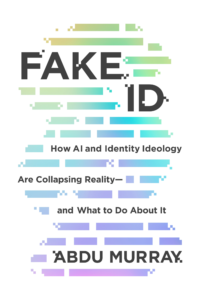
This groundbreaking exposé of how artificial intelligence and gender ideology undermine our view of reality helps us cut through the chaos and find the hope we’re looking for.
We hear that technology will set us free and that identity is whatever we choose. What we’re not being told is how these promises unravel reality itself, leaving us restless and confused in a world where we can no longer tell what is true.
Christian thought leader Abdu Murray shows us how the ancient, yet timeless wisdom of Scripture anchors us to transcendent truth as we navigate today’s cultural tsunamis.
A compassionate guide to finding scientific and moral clarity, Fake ID equips us to think clearly, love deeply, and live with unshakeable hope.
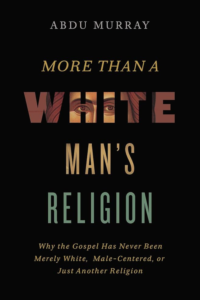
Though many today accuse Christianity of being a white, imperialistic religion, it is actually the source for cherished Western ideals of racial and gender equality. In More Than a White Man’s Religion, author and speaker Abdu Murray shares stories from the Bible and his own experiences as a global apologist, a member of an ethnic minority, a son of immigrants, and a former Muslim to show that the gospel message provides dignity and liberty to non-whites and women.
Without overlooking the places where Christianity has failed to live up to its own ideals, Murray challenges the myth that Christianity is an oppressive, Western religion and shows believers how to better fulfill their God-given mandate to uphold the dignity of every human being.
Tackling head-on one of the most serious challenges to the Christian faith in our multicultural age, More Than a White Man’s Religion demonstrates how the gospel can inspire positive change for modern culture.
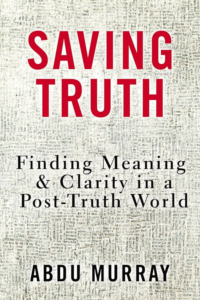
Increasingly, Western culture embraces confusion as a virtue and decries certainty as a sin. Those who are confused about sexuality and identity are viewed as heroes. Those who are confused about morality are progressive pioneers. Those who are confused about spirituality are praised as tolerant.
Conversely, those who express certainty about any of these issues are seen as bigoted, oppressive, arrogant, or intolerant. This cultural phenomenon led the compilers of the Oxford English Dictionary to name “post-truth” their word of the year in 2016. It’s popularity and relevance has only increased since then.
By accurately describing the Culture of Confusion and how it has affected our society, author Abdu Murray seeks to awaken Westerners to the plight we find ourselves in. He also challenges Christians to consider how they have played a part in fostering the Culture of Confusion through bad arguments, unwise labeling, and emotional attacks.
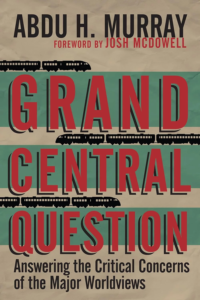
All religions and worldviews seek to answer the fundamental questions of human existence: Why am I here? What does it mean to be human? Why is there evil in the world and how do we deal with it?
But not every worldview places equal emphasis on each issue. The main worldviews each tend to stress a different central question. Secular humanism focuses on: What is the inherent value of human beings? Pantheism emphasizes: How do we escape suffering? Islam’s main concern is: How is God great?
Abdu Murray digs deeply into these three representatives of major worldviews of our day: secular humanism, pantheism and theism (specifically in the form of Islam). This lawyer and former Muslim brings compassion, understanding and clarity to his analysis, comparing the answers of each view to the central message of Christianity.
It’s time to start proclaiming the good news.
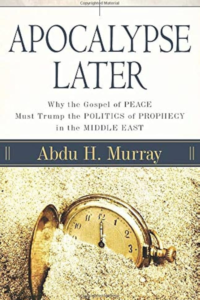
Many evangelicals have used the ongoing conflict in the Middle East as fodder for debates over how to interpret prophecy, instead of seeing it as the human tragedy that it is. In Apocalypse Later, former Muslim Abdu Murray urges Christians to change their focus from eschatology to the gospel of Jesus Christ, because only Christ can change the hearts of Jews and Muslims in the midst of conflict.